
Aerobics
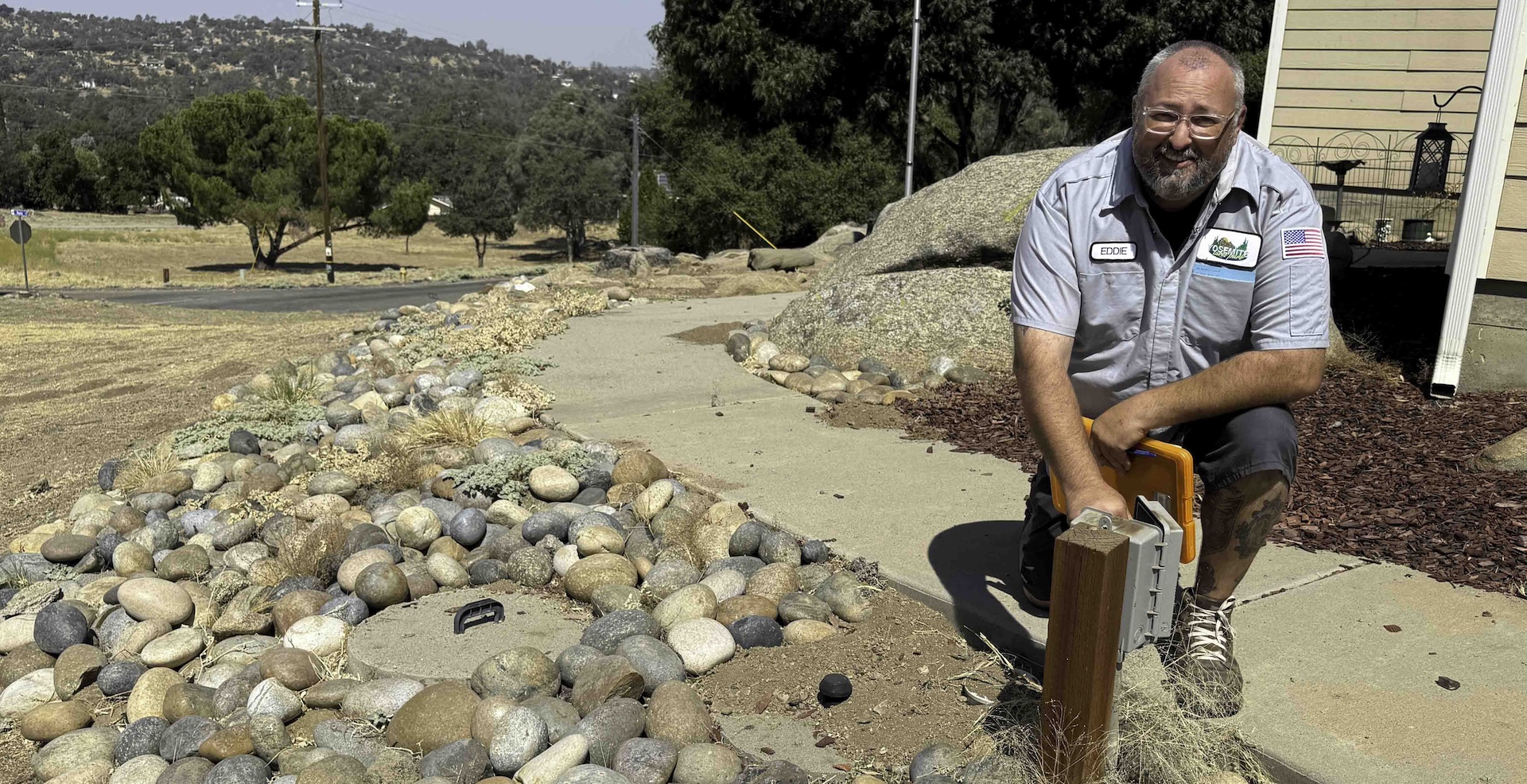
Aerobics Inspector Eddie Farris checks the status of one of the hundreds of systems he inspects in YLP every weekday.
About your aerobic system
An aerobic treatment system or ATS, often called (incorrectly) an aerobic septic system, is a small scale sewage treatment system similar to a septic tank system, but which uses an aerobic process for digestion rather than just the anaerobic process used in septic systems. These systems are commonly found in rural areas where public sewers are not available, and may be used for a single residence or for a small group of homes.
Unlike the traditional septic system, the aerobic treatment system produces a high quality secondary effluent, which can be sterilized and used for surface irrigation. This allows much greater flexibility in the placement of the leach field, as well as cutting the required size of the leach field by as much as half. (Sources: Wikipedia & EPA Manual)
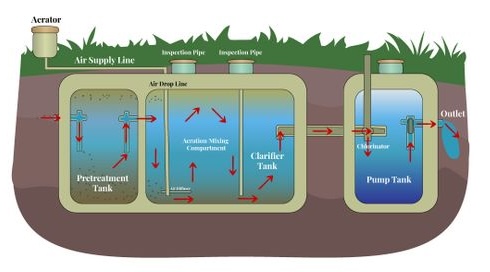
One of many kinds of aerobic septic systems.
B&B Pumping graphic
Aerobic septic systems are installed in YLP because of the type of terrain throughout the association, to help protect the environment and are required by Madera County.
The purpose of an aerobic septic system is to allow a cleaner effluent (“wastewater”) to leave the septic tank. This is accomplished by pumping air into the tank, which encourages “aerobic bacteria” that breathe and work more efficiently, as opposed to anaerobic bacteria in a typical septic tank, which do not require air and are less efficient.
The treated effluent is then gravity fed or pumped out of the septic tank into the leach fields. When solids are not broken down properly, they may plug up pumps and/or leach fields costing hundreds of dollars in repairs.
It is very important to make sure your aerobic system is working properly at all times and that the system is set to operate long enough to not only do the proper job, but to also eliminate odors. All systems need to be accessible for the Aerobic Inspector to inspect at any time; this naturally includes access to properties with barriers at entrances.
The Inspectors are not authorized to touch the units to see if they are operating properly. If, at the time of inspection, the unit is not running, the Inspector will mark that the timer box was off. The unit then must be considered faulty and failed.
Depending on the health risk factor, the homeowner will have 60 days or less to repair the faulty unit. If the homeowner has a legitimate reason that will cause them to exceed the 60-day grace period, more time may be allowed as necessary to complete the repairs.
Please contact the Customer Services and Support (CSS) at 559-517-3499 for additional information that may further explain and assist you in understanding how an aerobic septic system works.
Eddie Farris, the YLOA septic system inspector, maintains the aerobic and gravity-fed systems of YLP homes. He checks for leaks, electrical issues, and system operation, typically inspecting around 100 systems per day. He has more than 2,000 systems to inspect, including those on new or empty lots. Farris emphasizes the importance of preventative maintenance, with inspections mandated monthly by Madera County. Residents often don’t see him due to the quick visual inspections and the systems’ locations, he said. He appreciates homeowners’ cooperation in giving him access to inspect, which is required by law.
AREA AEROBIC AND SEPTIC SERVICES
• Affordable Plumbing Service……..559-658-1654
• Alternative Septic Systems………….559-683-7474
• BC Construction…………………………..209-742-7989
• Big Oak Septic Service………………..559-683-7707
• Bio Tech………………………………………559-642-0490
• Goodell Tractor and Septic…………559-642-3100
• Hinkle Construction……………………559-260-0192
• John Wayne Plumbing………………..559-642-3853
• Mike’s T.P. Plumbing……………………559-641-5566
• Oakhurst Plumbing…………………….559-683-2232
• Strong Septic Service…………………559-676-8962